If you own in Hoboken or Jersey City and feel like you have outgrown your current space, Bergen County is often the next place to look. It keeps you in the New York metro orbit while opening up more choices in home size, layout, outdoor access, and commute style. The key is knowing that Bergen County is not one single market, but a town-by-town move-up landscape with very different price points and trade-offs. Let’s dive in.
Why Bergen County makes sense
For many Gold Coast owners, Bergen County is the logical next ring out. You can stay connected to New York City and Hudson County while gaining access to a broader mix of housing types than you often find in Hoboken or Jersey City.
That flexibility matters because Bergen County is structurally diverse. The county master plan describes a patchwork of mostly boroughs, along with townships, cities, and villages, which helps explain why housing options, commute patterns, and pricing can change quickly from one municipality to the next.
Bergen County also offers a different day-to-day setting. The county highlights nearly 9,000 acres of parks, five golf courses, a zoo, and other recreation, which gives move-up buyers a practical reason to think beyond square footage alone.
Think town by town, not countywide
One of the biggest mistakes buyers make is treating Bergen County like a single bucket. In reality, your experience will depend heavily on which town you choose and how that town fits your priorities.
Some towns keep you closer to Hudson River access and NYC bus or ferry options. Others lean more suburban, with different rail or bus patterns, more varied lot sizes, and a more traditional residential feel.
That is why a Bergen County move-up plan works best when you start with your decision framework first. Usually, that means balancing four things:
- Commute convenience
- Interior space
- Outdoor access
- Taxes and overall monthly cost
Bergen County commute options
Commute access is a major reason Bergen County fits into a Gold Coast move-up plan. NJ TRANSIT serves Bergen County through the Main Line, Bergen County Line, and Pascack Valley Line.
For buyers who want to stay tied to Manhattan-facing transit, bus service is also important. NJ TRANSIT routes 156R, 158, and 159R connect Fort Lee, Cliffside Park, Edgewater, Weehawken, and NYC.
If you are focused on waterfront access, Edgewater adds another option. NY Waterway’s Edgewater ferry offers weekday service to Midtown, Brookfield Place, and Wall Street, along with free shuttle connections during commuter hours.
How pricing compares
A move-up plan only works if the numbers make sense. According to New Jersey Division of Taxation 2025 average residential statistics, Bergen County had an average sales price of $869,611.82 and an average tax bill of $14,200.
For context, Hudson County’s average sales price was $774,187.83 and its average tax bill was $10,502. Within Hudson County, Hoboken’s average sales price was $1,064,134.56, while Jersey City’s was $786,184.13.
The takeaway is not that Bergen County is simply cheaper or more expensive. The real takeaway is that Bergen County gives you a wider spread of options, and your budget outcome depends much more on the municipality than on the county label.
Bergen County price spread matters
Bergen County covers a large pricing range. In the same 2025 state data, average sales prices were about $701,180 in Fort Lee, $692,652 in Teaneck, $1,222,160 in Paramus, $1,231,464 in Woodcliff Lake, $1,345,963 in Ridgewood, and $1,451,463 in Tenafly.
Tax bills vary just as much. Average tax bills ranged from $12,983 in Fort Lee to $25,128 in Tenafly in that dataset.
That spread is the heart of the move-up conversation. Bergen County is not one price point, one tax level, or one lifestyle pattern.
Three practical move-up paths
For most Hoboken and Jersey City owners, Bergen County fits into one of three practical paths. This is a simple way to understand the landscape before you narrow into specific towns.
Stay-close-to-the-water path
This path usually points buyers toward places like Fort Lee, Edgewater, or Cliffside Park. The appeal is straightforward: you stay closer to Hudson-facing transit patterns while often gaining more space or a different housing format.
If your current routine depends on quick Manhattan access, this path can feel like the most natural next step. It often works well for buyers who want to preserve as much of their current commute rhythm as possible.
Suburban-but-commutable path
This path tends to fit buyers who are ready to trade some walkability for more interior space and a different residential setting. Towns such as Teaneck, Ridgewood, River Edge, and Paramus often enter the conversation because they still offer meaningful rail or bus access.
For many move-up buyers, this is the middle lane. You are not staying right on the water, but you are also not making a full leap into the farthest-out version of suburban living.
Full family-suburb path
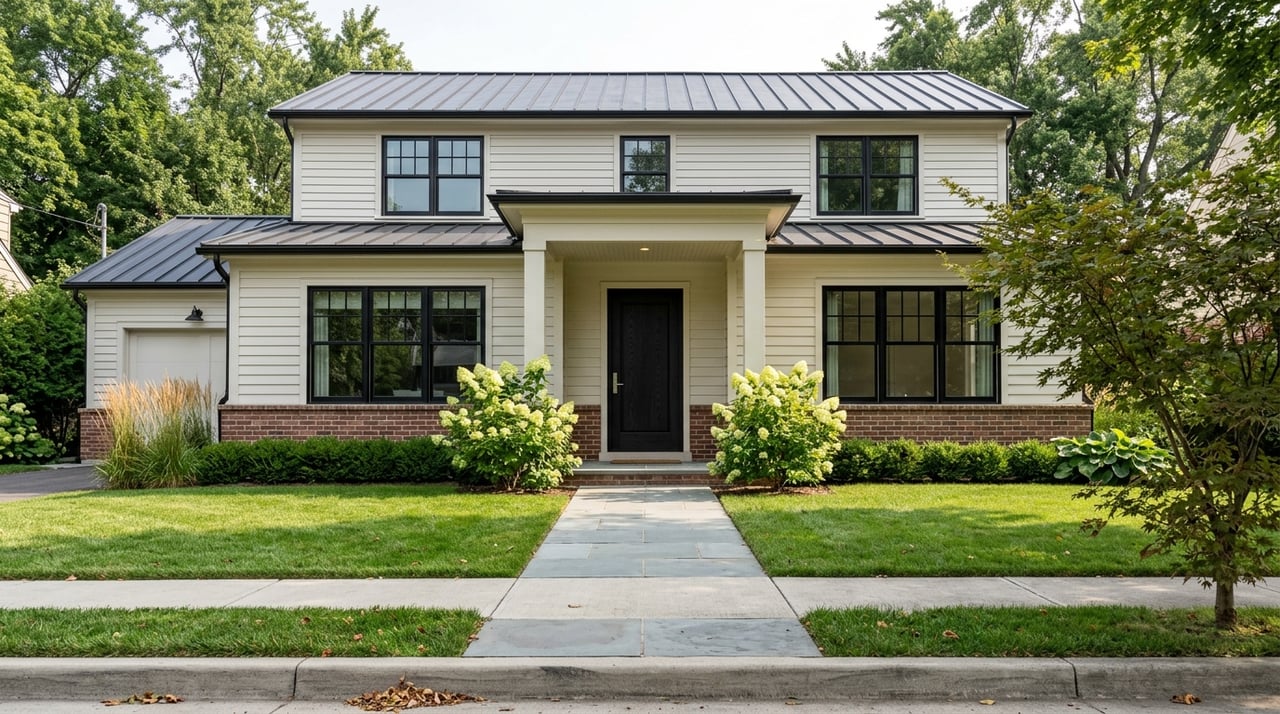
This path is usually for buyers who want a more traditional single-family setup and are prepared for higher budgets in some municipalities. Towns such as Tenafly, Woodcliff Lake, Wyckoff, and Saddle River often represent this side of the Bergen County spectrum.
The trade-off is usually clear. As price and tax bills rise, you may gain more land, more house, and a different pace of living, but the commute and monthly carrying costs need to be weighed more carefully.
The move-up trade-offs to weigh
Every Bergen County move-up plan comes down to trade-offs. More space may mean a different commute. Lower average purchase price in one town may still come with meaningful tax costs. A faster route to Manhattan may narrow your housing choices.
That is why the smartest approach is to define what matters most before you start touring homes. A clear ranking of priorities can save you time and keep you from chasing towns that do not actually fit your next chapter.
A simple planning checklist can help:
- What commute are you trying to preserve
- How much more space do you actually need
- What monthly payment range feels comfortable after taxes
- How important is outdoor access or parking
- Do you want a condo, townhome, or single-family home
Why timing matters in a move-up plan
A move-up purchase is rarely just a purchase. It is usually a coordinated sale and purchase, which means timing matters as much as location.
Consumer guidance from the CFPB notes that if you want to move, you normally try to sell your current home before buying another one. The agency also notes that sellers often want to see a preapproval letter before accepting an offer.
That timing window can get tight. The CFPB says preapproval letters are based on assumptions and often expire in 30 to 60 days, so your sale timeline and your purchase timeline need to work together.
Budget for closing costs and fees
When you are moving up, equity is only part of the equation. Up-front costs and closing costs can change how much you actually have available for the next purchase.
The CFPB says closing costs typically run about 2% to 5% of the home purchase price, not including the down payment. On the New Jersey side, the Division of Taxation states that sellers pay the state Realty Transfer Fee at closing, and buyers of certain homes over $1 million may owe an additional 1% fee.
The state also notes that most sellers must file GIT/REP forms, and some nonresident sellers may need to make an estimated tax payment at closing. These details are part of why a move-up decision should be planned as a full transaction strategy, not just a home search.
What Gold Coast sellers should plan first
If you are selling in Hoboken or Jersey City before buying in Bergen County, start with the sale side of the plan. How quickly your current home can sell will shape the towns, price points, and timing options available to you.
This is where preparation can matter. A thoughtful pricing strategy, polished presentation, and coordinated vendor plan can help you protect your timeline and your net proceeds.
For sellers who want to improve presentation before listing, Story Residential’s advisory approach includes staging and renovation value estimating, along with access to Compass Concierge for fronted, no-interest home improvement services such as painting, flooring, cleaning, landscaping, and related prep work intended to help optimize sale outcomes.
Why local guidance matters
Bergen County rewards specificity. The right move-up choice is rarely “Bergen County” in the abstract. It is a specific town, with a specific commute pattern, tax profile, and housing mix that fits your life after the sale of your current home.
That is especially true for Gold Coast owners coming from building-driven markets like Hoboken and Jersey City. The same disciplined, detail-oriented approach you use to evaluate condo buildings, carrying costs, and resale potential should carry over into your Bergen County search.
A strong plan usually starts with a few grounded questions. Which move-up path best matches your routine, what will your true post-sale budget look like, and how should your sale and purchase be sequenced so you can move with less friction?
If you are starting to map out a move from Hoboken or Jersey City into Bergen County, Story Residential can help you build a practical, town-specific plan with clear numbers, sharp positioning, and calm execution.
FAQs
How does Bergen County compare to Hoboken and Jersey City for a move-up buyer?
- Bergen County offers a broader mix of housing types, commute patterns, and price points while staying within the New York metro orbit, but the best fit depends on the specific municipality.
What is the average home price in Bergen County?
- New Jersey Division of Taxation 2025 average residential statistics show Bergen County with an average sales price of $869,611.82.
What is the average property tax bill in Bergen County?
- The same 2025 state statistics show an average Bergen County residential tax bill of $14,200.
Which Bergen County towns make sense for staying close to Manhattan access?
- Fort Lee, Edgewater, and Cliffside Park are often part of the stay-close-to-the-water path because of their bus or ferry connections tied to Manhattan access.
What transit options serve Bergen County commuters?
- Bergen County is served by NJ TRANSIT’s Main Line, Bergen County Line, and Pascack Valley Line, and certain towns also have strong bus access, with Edgewater offering weekday ferry service.
How should you time a move-up purchase from Hudson County to Bergen County?
- A move-up plan is usually best treated as a coordinated sale-and-purchase process, since selling first, maintaining a current preapproval, and accounting for closing costs and state fees can all affect your options.